

Alternative Construction and Beyond
Pattern One: Delete. Pattern Two: Capture. Pattern Three...

The signs are everywhere, if you know where to look. A German state announces it's done with Microsoft Teams. A billionaire venture capitalist podcasts a manifesto justifying the rule of tech elites. AI researchers scramble to prevent a "data winter." These might seem like disconnected events, but they reveal something deeper: three distinct responses to the role of institutions to handle concentrated power at technological speed.
I see a choice that will define the next decade: between resistance, capture, and something else entirely.

Three Patterns*
*Human Detected.
The first pattern is resistance through sovereignty. Schleswig-Holstein is Germany's northernmost state, which just pushed the delete button on a Microsoft contract. As their digitalisation minister put it: "The war in Ukraine revealed our energy dependencies, and now we see there are also digital dependencies."1 This is institutional withdrawal: saying no to extraction and rebuilding local capacity. But switching to LibreOffice may shift the digital dependency, but these types of organizations run on the same global supply chains of rare earth minerals and semiconductor manufacturing that concentrate power in fewer hands. Governments pressing delete, uninstall buttons is likely to catch on, but insufficient for the stated aims.
The second is consolidation through capture. Marc Andreessen's distortion of the "Iron Law of Oligarchy" exemplifies this perfectly. He cites the theory to justify why Silicon Valley "builders" should rule without democratic oversight.2 Any attempt at public accountability becomes, in his telling, an obstacle to progress. This is power disguised as inevitability.
The third is alternative construction through the commons. As AI development is concentrated in the hands of a few tech giants, there is more experimentation with public AI. The Open Future Foundation and partners propose AI systems "developed under transparent governance, with public accountability, equitable access to core components (such as data and models), and a clear focus on public-purpose functions."3 This approach operates across three pathways: public compute infrastructure supporting open-source development, datasets governed as digital public goods through commons-based mechanisms, and fully open-source AI models. Sounds good. But what everyday practices does this actually change?
Pattern one: Delete. Uninstall.
Pattern two. Capture.
Pattern three: _Alt Construction.
What makes these patterns significant is what they reveal about the limits of our current approaches, not their novelty. The German state's withdrawal tackles one layer of dependency while leaving others intact. Andreessen's capture celebrates the very systems that are creating the problems. Public AI experiments, while promising, risk falling into the innovation trap of assuming better design can overcome structural inefficacies.
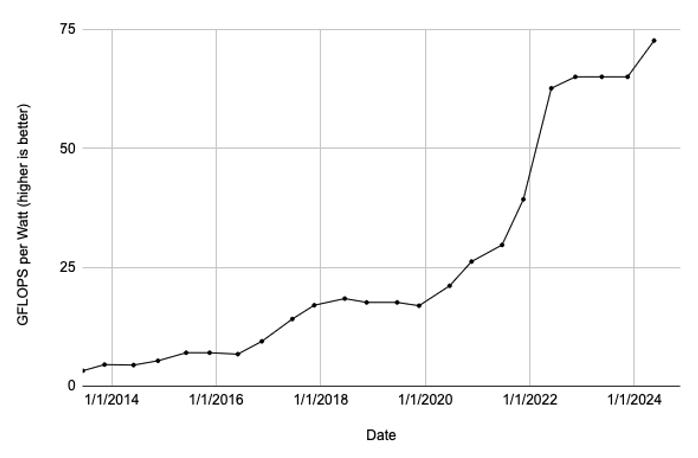
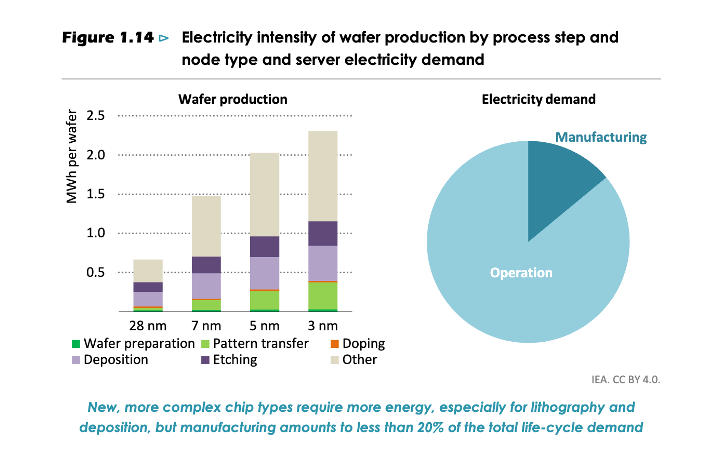
The real challenge is confronting access to resources and material conditions that make AI concentration inevitable under current economic arrangements, not merely finding better solutions. GFLOPS4 per Watt may be decreasing5 at a massive rate, but Microsoft is trying to turn Three Mile Island back on to feed the need for servers required to power enterprise AI. Data cooperatives might redistribute some decision-making, but they don't challenge the fundamental processes that make data valuable in the first place.
The Data Winter Problem
To understand why these responses matter, consider what researchers call the emerging "data winter." While we experience what The New Stack calls "a boom in open source AI models," the data landscape has stalled. Web domains are restricting AI crawls. Social networks are removing data access. The Open Source Initiative's Stefano Maffulli describes current AI practices as "strip-mining the data generated by people and feeding it into a proprietary system that grants access at a price."6
This scarcity advantages those with proprietary access. This benefits the consolidation Andreessen champions. But it also creates space for alternatives.
Experiments in Alternative Construction
The most honest experiments acknowledge these contradictions. When a European government switches from Microsoft to open-source alternatives, civil servants still spend their days managing the same bureaucratic processes that digital tools were meant to streamline.
When Serpentine Labs creates a data trust for choir recordings, the interesting question is what practices of musical collaboration it enables or forecloses, not the governance structure.7 Does it support existing ways people make music together, or does it reshape those practices around the needs of AI training?
The European Genome-phenome Archive's "Data Use Ontology" represents institutional innovation: twenty categories for governing access to genetic data.8 However, its success depends on the everyday practices of researchers, patients, and communities that determine how those categories are interpreted and applied.
The most interesting developments emerge from experiments: tentative, imperfect, but real attempts to design different relationships between people, data, and power.
Designing for Migration
Regulatory sandboxes create temporary spaces for experimentation with the explicit expectation that successful models will eventually be integrated into broader governance frameworks or that failed models will be decommissioned intentionally rather than just collapsing. This matters because technological systems accumulate momentum. Today's experiments become tomorrow's infrastructure, which becomes next decade's legacy system that will be too embedded to change. What would it look like to design for migration?
What Changes Daily Life?
The test of any alternative construction is what it changes about how people actually live and work. Open-source software succeeds because it enables different collaboration practices among programmers, not because of its licensing model. The question for public AI is whether it can compete with corporate models and whether it enables fundamentally different relationships to information, automation, and decision-making. Can it support practices of collective learning rather than individual consumption? Can it strengthen rather than replace human capacities for judgment and care?
The Material Commons
Real alternative construction requires wrestling with material flows: the energy, minerals, and labor that make digital systems possible. This means designing not just for democratic governance but for contribution.
Contribution: advancing the complexity, intelligence, and life-carrying capacity of the larger living systems we're embedded within.
Peculiar experiments are happening at the intersection of digital and material commons. Community networks manage both broadband infrastructure and the social relationships that maintain it. Urban farms use sensor networks designed and controlled by the people who work the land. Tool libraries that include both physical tools and digital fabrication capabilities to modify and repair them.
Designing for Contribution
These experiments share a common thread: they treat governance as the primary innovation, and they are starting to see finance and investment resources as part of the system that needs to be designed. They recognize that preferred alternatives require more than good intentions and benevolent funders. They need institutional infrastructure that can compete with extraction at scale.
But what distinguishes genuine alternatives is how they organize contributions. The challenge is scaling contribution without reproducing the extraction it seeks to replace. AI experiments that seek to subvert incumbents face this test: can they create meaningful ways for communities to contribute to AI development beyond simply providing data? Can they distribute both the contributions and the benefits of AI systems rather than concentrating them in the hands of technical experts?
This requires designing contribution pathways that strengthen rather than exploit the communities they serve. Organizations that choose to keep data ownership in the hands of humans, a.k.a patients, succeed when they help members understand and control their data relationships as interdependent individuals within the larger group, not just when they accumulate datasets.
Beyond the Choice
The choice between resistance, capture, and alternative construction may itself be a false frame. Moving from critique to construction requires acknowledging that none of our existing institutions were designed for this moment: governments, corporations, even traditional open-source communities. The most promising developments combine all three: resistance to extractive systems, strategic engagement with existing power structures, and construction of alternatives that can outlast both.
The test will be whether these efforts can create genuine contribution loops where the work of building alternatives strengthens the capacity for further resistance and construction. The next revolution will emerge from the interactions between multiple strategies operating at different scales and timescales.
Cue the French Horns.
GLFOPS: Giga Floating-point Operations Per Second, is a measure of a computer's processing power, specifically indicating how many billions of floating-point calculations it can perform each second. It's a common metric used to assess the performance of CPUs, GPUs, and other computing devices.